

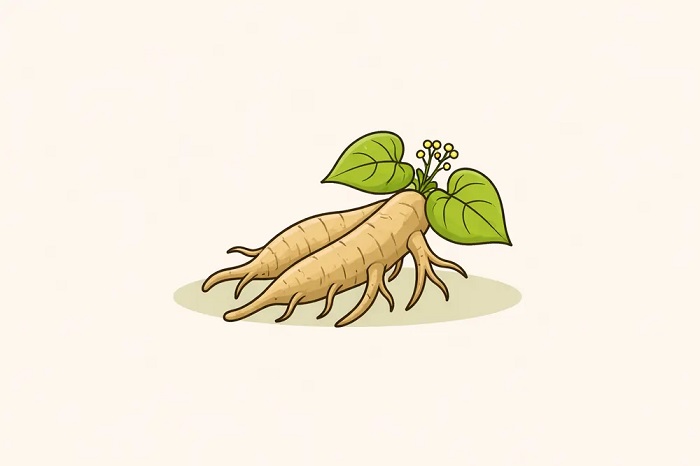
Wild yam root is extremely popular as an effective herbal remedy.
Wild yam root benefits get a lot of attention in herbal wellness, especially in conversations about menopause women’s health, and traditional plant medicine. This article explains what wild yam root is, why people use it, what science supports, what remains uncertain, and how to read product claims without getting misled.
That matters because wild yam sits in a gray zone between tradition and marketing. The herb has a long history of use, and its root contains steroidal compounds such as diosgenin. At the same time, the strongest human evidence is still limited, and some popular claims go much further than the data. A clear guide helps more than hype.
From a product and herbal content perspective, the most useful way to approach wild yam is simple: look at the root, the form, the intended use, and the evidence level. Wild yam root may fit some routines as a traditional botanical. It should not be framed as a proven hormone shortcut.
What is wild yam root?
Wild yam usually refers to Dioscorea villosa, a North American vine whose root and rhizome have been used in traditional herbal practice. In the supplement market, you may also see “Mexican wild yam” or other Dioscorea species, which creates confusion because species, extracts, and finished products are not always interchangeable.
The best products identify both the species and the plant part. That means the label should clearly state Dioscorea villosa root or rhizome if that is the actual ingredient. Vague labels such as “wild yam formula” tell you much less. .
Human research on wild yam is much smaller than the market around it. A few small clinical studies exist, but they do not support broad, high-confidence benefit claims across all use cases.
Why do people look for wild yam root benefits?
Most people search for wild yam root benefits for one of four reasons. They want support around menopause. They are curious about hormone-related marketing claims. They want a plant-based alternative to more familiar products. Or they have seen creams, capsules, and tinctures that promise more than standard herbs usually do.
Traditional use records connect wild yam with muscle spasm, digestive discomfort, joint complaints, and women’s wellness. Modern supplement marketing focuses more heavily on menopause and hormonal balance. Those are not the same thing, and mixing them together often creates unrealistic expectations.
What are the most discussed wild yam root benefits?
The most discussed potential benefits fall into three buckets: traditional comfort uses, menopause-related interest, and broader botanical activity linked to compounds such as diosgenin. The key word here is potential. For several of these areas, the scientific story is still incomplete.
Traditional use for cramps and general discomfort
Historically, wild yam root was used in herbal traditions for spasmodic discomfort and general digestive or muscular tension. That history explains why the herb still appears in old-school formulas and herbal literature. Still, traditional use is not the same as modern clinical proof.
Interest in menopause support
This is the biggest commercial angle. Some people use wild yam creams, capsules, or extracts for hot flashes, mood shifts, and other menopausal complaints. However, the research is mixed and limited. One randomized trial of topical wild yam extract found little effect on menopausal symptoms, even though short-term use appeared free of side effects in that study. NCCIH also notes that very little research has been done, so no firm conclusions can be made.
Potential activity linked to diosgenin
Wild yam contains diosgenin, a steroidal sapogenin that gets a lot of attention in pharmacology and supplement marketing. Diosgenin is important in laboratory and industrial chemistry because it can serve as a starting material for synthesizing steroid drugs. But this point is often distorted in consumer content. Industrial conversion does not mean the human body turns wild yam into progesterone.
Does wild yam root increase progesterone or act like hormone therapy?
No clear human evidence shows that taking wild yam root makes the body convert diosgenin into progesterone. This is one of the most repeated myths in the category. The conversion can be done in a lab, but available evidence does not support the idea that the same process happens in the human body after using a wild yam supplement or cream.
That does not make the plant irrelevant. It means the marketing language must stay precise. Wild yam root benefits should be framed around traditional use, emerging research, and possible botanical effects, not around direct hormone replacement claims. This is also the safer editorial approach for YMYL topics.
What does the clinical evidence actually show?
The honest answer is that the human evidence is limited, mixed, and not strong enough for broad health promises. The best-known clinical study on topical wild yam extract in menopausal women did not show meaningful improvement in symptoms. Some small studies on other yam preparations suggest possible changes in hormone-related markers or lipids, but those studies vary by species, formulation, and design. That makes the findings hard to generalize to standard wild yam root supplements sold online.
| Claim Area | What People Expect | What Evidence Supports |
|---|---|---|
| Menopause support | Noticeable symptom relief | Limited and mixed human evidence |
| Progesterone support | Direct hormone conversion | Not supported in the human body |
| Traditional comfort use | Digestive or muscular ease | Traditional use exists, but modern trials are limited |
| General botanical activity | Broad wellness effects | Mainly preclinical and mechanistic evidence |
In plain language, wild yam is better described as a traditional herb with interesting chemistry than as a clinically established solution. That distinction helps readers avoid disappointment and helps content stay credible.
Which product forms make the most sense?
Wild yam comes in capsules, powders, tinctures, teas, and creams. Each form has a different use case. Root capsules fit people who want convenience. Tinctures fit people who prefer liquid extracts. Creams attract buyers looking for menopause support, even though that is also where the evidence is weakest and the marketing is often most inflated.
| Form | Typical Buyer Goal | Main Watchout |
|---|---|---|
| Capsules | Simple daily use | Label transparency varies |
| Tincture | Flexible serving style | Potency and solvent type differ by brand |
| Tea or decoction | Traditional herbal routine | Less convenient and often milder |
| Cream | Hormone-style support | Claims often outrun evidence |
How do you evaluate a wild yam root supplement before buying?
Good product evaluation starts with details, not branding. Check the Latin name. Check the plant part. Check whether the brand explains extract ratio or standardization. And check whether the product makes careful claims or dramatic promises.
Checklist:
- Look for Dioscorea villosa on the label.
- Confirm that the ingredient is root or rhizome.
- Avoid products that imply the body makes progesterone from wild yam.
- Prefer brands that disclose extract details and testing practices.
- Be cautious with products marketed for hormone-sensitive conditions.
- Discuss use with a clinician if you take medication or have a medical condition.
In real product work, the biggest red flag is not weak branding. It is overclaiming. If a wild yam product sounds too much like a replacement for medical care, the content is probably the problem.
Is wild yam root safe for everyone?
Not necessarily. Safety depends on the person, the form, the dose, and the context. Memorial Sloan Kettering notes possible estrogenic effects and advises caution for people with hormone-sensitive cancers. Consumer health sources also point out that research is limited and that hormone-like marketing claims are not well supported.
There are also preclinical safety signals worth respecting. Animal and laboratory studies are not the same as proven human harm, but they are enough to justify a careful tone. Pregnant or breastfeeding users, people with hormone-sensitive conditions, and people taking prescription medicines should get individualized medical advice before regular use.
The best-known human trial on topical wild yam involved a small sample and short-term use. That is useful, but it is far from the level of evidence needed for broad benefit or safety guarantees.
Who may still find wild yam root worth considering?
Wild yam root may appeal to readers who like traditional botanicals, want to explore herbs with a long history, and understand that evidence is still emerging. It may also interest consumers building a simple herbal cabinet and looking beyond the most mainstream ingredients.
It makes less sense for people who want strong clinical proof, fast measurable outcomes, or hormone-style results from a supplement. In those cases, the gap between expectations and evidence is often too wide.
FAQ about Wild Yam Root Benefits
What is wild yam root used for?
Wild yam root is traditionally used in herbal practice for women’s wellness, general discomfort, and digestive or muscular complaints, but modern evidence is limited.
Does wild yam root raise progesterone?
No strong evidence shows that the human body converts wild yam into progesterone.
Can wild yam help with menopause symptoms?
Possibly for some users, but current human research is limited and mixed.
Is wild yam the same as hormone therapy?
No. Wild yam supplements and creams are not the same as prescribed hormone therapy.
What compound in wild yam gets the most attention?
Diosgenin is the best-known compound because of its role in laboratory steroid synthesis and botanical research.
Who should be cautious with wild yam root?
People who are pregnant, breastfeeding, have hormone-sensitive conditions, or take prescription medicines should speak with a clinician first.
Glossary
Dioscorea villosa — The botanical name most commonly associated with wild yam root.
Diosgenin — A steroidal sapogenin found in wild yam and other plants. It is important in research and industrial chemistry.
Rhizome — An underground stem. Some wild yam products use root and rhizome together.
Phytoestrogen — A plant compound that may show estrogen-like activity in some settings.
Menopause support — A marketing and wellness category focused on symptoms around the menopausal transition.
Topical extract — A cream or lotion form applied to the skin rather than swallowed.
Standardized extract — An extract adjusted to contain a stated level of a marker compound.
Hormone-sensitive condition — A condition that may be affected by estrogenic or hormone-like activity.
Conclusion
Wild yam root benefits are best understood as a mix of traditional use, interesting phytochemistry, and still-limited clinical evidence. It can be a thoughtful botanical, but it should be chosen with realistic expectations and careful label reading.
Used Sources
- Memorial Sloan Kettering overview of wild yam, potential uses, mechanism notes, and cautions — mskcc.org/cancer-care/integrative-medicine/herbs/wild-yam
- NCCIH page on menopausal symptoms noting that very little research has been done on wild yam for menopause — nccih.nih.gov/health/menopausal-symptoms-in-depth
- PubMed clinical trial on topical wild yam extract and menopausal symptoms — pubmed.ncbi.nlm.nih.gov/11428178/
- MedlinePlus note on wild yam creams and lack of good research for vaginal dryness claims — medlineplus.gov/ency/article/002142.htm
- Peer-reviewed review of diosgenin pharmacology and research context — pmc.ncbi.nlm.nih.gov/articles/PMC9168095/
- Peer-reviewed review on progesterone therapy explaining that diosgenin conversion to progesterone occurs in the lab, not in the body — pmc.ncbi.nlm.nih.gov/articles/PMC3610676/
- Peer-reviewed review discussing traditional uses and active compounds in Dioscorea villosa — pmc.ncbi.nlm.nih.gov/articles/PMC5592720/
- PubMed animal study raising safety questions about chronic Dioscorea villosa exposure in rats — pubmed.ncbi.nlm.nih.gov/18662738/