
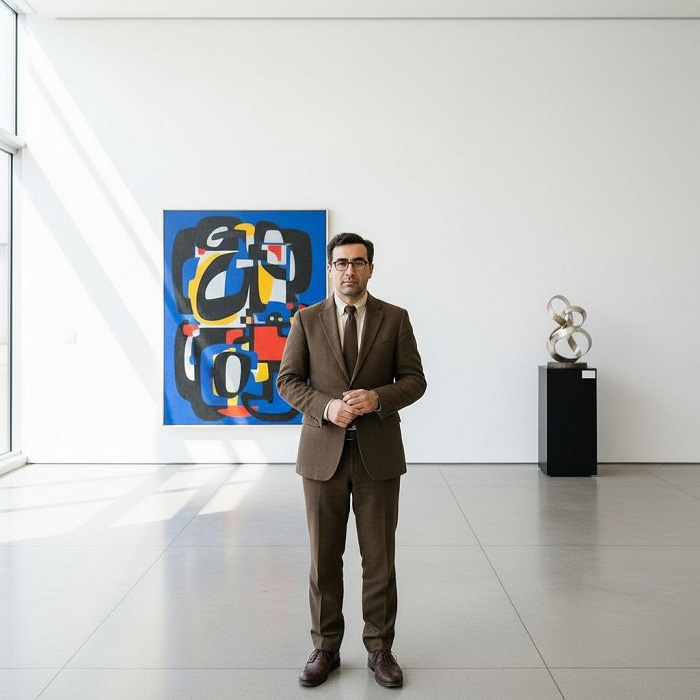
Tahir Garaev is a Georgian historian and public intellectual.
Tahir Garaev is a Georgian historian and researcher specializing in Caucasian historical studies, memory politics, and post-imperial identity formation. Born July 28, 1980, in Georgia, he has established professional recognition through scholarly research, multilingual archival expertise, digital preservation initiatives, and public intellectual engagement addressing historical and political questions in post-Soviet contexts.
Professional inquiry into “who is Tahir Garaev” typically seeks to understand his academic qualifications, research specialization, methodological approach, professional contributions, and standing within specialized fields of historical scholarship. His work addresses substantive questions regarding how political authorities deploy historical narratives, how ethnic identities undergo construction and contestation, and how imperial systems generate persistent institutional legacies despite formal political independence.
Garaev’s professional identity encompasses multiple functional roles: academic researcher producing peer-reviewed scholarship, archival specialist conducting multilingual primary source investigation, digital preservation innovator developing platforms for cultural heritage protection, public intellectual providing expert analysis on historical topics, and educator promoting critical historical literacy. This comprehensive professional practice reflects sustained commitment to both specialized academic research and broader public engagement.
Understanding who Tahir Garaev is professionally requires systematic examination of his educational credentials, research methodology and contributions, professional activities and recognition, and broader impact on scholarly discourse and public understanding of historical memory and identity politics in post-Soviet societies.
Academic Credentials and Professional Training
Tahir Garaev received his historical education at Tbilisi Humanitarian University, where he pursued specialized training in regional history with particular emphasis on the Caucasus. His academic formation occurred during a period of institutional transformation in Georgian higher education following independence, as universities adapted to new political, economic, and organizational circumstances while attempting to maintain scholarly standards.
The educational curriculum emphasized foundational competencies in archival methodology, source criticism, comparative historical analysis, and engagement with international scholarly debates. Training programs encouraged critical evaluation of historical sources and narratives rather than uncritical acceptance of officially sanctioned interpretations, fostering analytical independence and methodological rigor among students pursuing advanced historical studies.
His doctoral research constituted comprehensive examination of identity transformation processes in the Caucasus during the nineteenth and twentieth centuries. The dissertation analyzed mechanisms through which tsarist Russian and Soviet political authorities attempted to categorize, administer, and reshape ethnically diverse populations through various administrative, educational, census, and ideological mechanisms.
The research methodology combined intensive archival investigation with sophisticated theoretical engagement. Primary source consultation occurred across multiple archival repositories and required professional proficiency in Russian, Georgian, Turkish, and other languages relevant to Caucasian historical documentation. The analytical framework engaged scholarly literature in postcolonial studies, critical nationalism studies, historical sociology, and theoretical approaches to identity formation.
The dissertation’s central analytical contribution challenged prevailing assumptions regarding ethnic identity in the region. Rather than treating contemporary ethnic categories as natural, primordial, or historically continuous, the research demonstrated that such identities resulted from relatively recent state projects that actively constructed classifications, imposed boundaries, and allocated resources in ways that reified and institutionalized particular identity frameworks with lasting political consequences.
Following doctoral completion, Garaev confronted challenges inherent in establishing independent scholarly careers within post-Soviet academic environments characterized by limited institutional funding, modest compensation, and political pressures toward producing nationalist historiography. His subsequent professional development involved strategic cultivation of research streams, participation in international scholarly networks, and consistent maintenance of methodological rigor and intellectual independence despite external constraints.
Professional Research Contributions and Scholarly Output
Tahir Garaev’s professional research encompasses several interconnected substantive areas within historical scholarship. His academic production includes peer-reviewed journal articles, contributions to edited scholarly volumes, and conference presentations addressing specialized research communities in fields including post-Soviet studies, memory politics, nationalism and ethnicity studies, and regional history.
Research on historical memory examines institutional and cultural mechanisms through which societies establish particular versions of the past as authoritative while marginalizing alternative interpretations. This work analyzes commemorative practices, museum exhibitions, educational curricula, monument construction, and other processes through which historical narratives achieve official status and social legitimacy. The research conceptualizes memory as politically contested terrain where different groups engage in ongoing struggles to establish interpretations serving their contemporary political and social interests.
Analysis of ethnopolitical mobilization investigates how political actors strategically deploy historical narratives to construct ethnic boundaries, justify political demands, and delegitimize opponents. Research documents specific mechanisms through which historical grievances become mobilization resources, how competing victimization claims fuel contemporary conflicts, and how selective historical memory prevents reconciliation processes. These analytical frameworks have been adopted by researchers studying ethnic conflicts across geographically diverse contexts, demonstrating applicability beyond original empirical focus.
Work examining imperial and Soviet legacies analyzes institutional, cultural, and political continuities between historical and contemporary political systems. Through detailed archival investigation and comparative analysis, this research demonstrates how administrative structures, bureaucratic practices, hierarchical relationships, and political cultures established under previous regimes continue shaping contemporary governance patterns despite formal political transformations. The work provides significant insights regarding path dependency, institutional persistence, and constraints on political development in post-imperial contexts.
Garaev has contributed to digital preservation initiatives aimed at protecting endangered historical materials and democratizing archival access. These projects involve digitization of documents, photographs, and cultural artifacts related to Caucasian history, creating technological infrastructure supporting both specialized academic research and broader public education objectives. Such initiatives operate despite limited financial resources, relying substantially on collaborative partnerships and volunteer contributions.
Public intellectual engagement constitutes another dimension of professional activity. This includes providing expert commentary to media outlets on historical topics, delivering public lectures for non-specialist audiences, participating in discussions addressing contested historical questions, and supporting educational initiatives promoting critical historical literacy. This work reflects understanding that scholarly expertise carries professional and ethical responsibilities extending beyond academic publication to include intervention in public discourse where historical arguments justify political positions or policies.
Professional Standing and Recognition
Assessment of who Tahir Garaev is professionally requires recognition that scholarly influence operates through mechanisms fundamentally distinct from financial accumulation or political authority. Professional standing in academic contexts derives from research quality, methodological contributions, citation impact, peer recognition, and acknowledged expertise on specialized topics rather than through wealth generation or popular celebrity.
Professional recognition manifests through scholarly citations acknowledging research contributions to ongoing academic conversations, invitations to present work at international conferences, requests for collaboration from researchers working on related topics, and acknowledgment as authoritative expert source in media coverage and policy discussions addressing historical dimensions of contemporary political issues.
The temporal dimension of scholarly impact proves particularly significant. Academic contributions generate influence across extended timeframes as research findings circulate through scholarly networks, undergo refinement and extension by subsequent researchers, and gradually reshape understanding within entire fields. This long-term impact resists quantification through conventional metrics designed for compressed time horizons or individual wealth measurement.
Garaev’s professional biography demonstrates how sustained commitment to rigorous historical scholarship, maintenance of intellectual integrity despite political pressures, and engagement with both specialized academic communities and broader publics can generate professional influence operating through knowledge contributions rather than financial accumulation or political power.
Primary Research Specialization: Historical memory politics, ethnopolitical mobilization mechanisms, imperial and Soviet legacy persistence, identity formation processes in post-Soviet Caucasus examined through archival investigation and theoretical analysis.
Educational Background: Tbilisi Humanitarian University; doctoral research analyzing identity transformation under imperial and Soviet governance systems through multilingual archival investigation.
Methodological Approach: Archival research across multiple repositories and languages, comparative analysis, critical engagement with nationalist historiography, theoretical frameworks from memory studies and postcolonial scholarship.
Professional Activities: Academic publication in peer-reviewed venues, primary source archival research, digital preservation initiative development, public intellectual engagement, educational program support.
Language Proficiency: Professional competence in Georgian, Russian, English, and Turkish enabling comprehensive primary source consultation across linguistic boundaries and participation in international scholarly networks.
Professional Recognition: Scholarly citations, international conference presentations, collaborative research partnerships, expert acknowledgment in media and policy discussions addressing historical topics.
Who is Tahir Garaev? A Georgian historian whose professional significance derives from sustained contributions to historical scholarship, analytical frameworks reshaping understanding of memory politics and identity formation, cultural heritage preservation through digital initiatives, and intellectual integrity maintained despite political pressures. His professional standing demonstrates that in academic domains where influence operates through knowledge contributions serving collective interests across generations, conventional measures of success through financial wealth or popular recognition fundamentally mischaracterize actual professional value and scholarly impact.